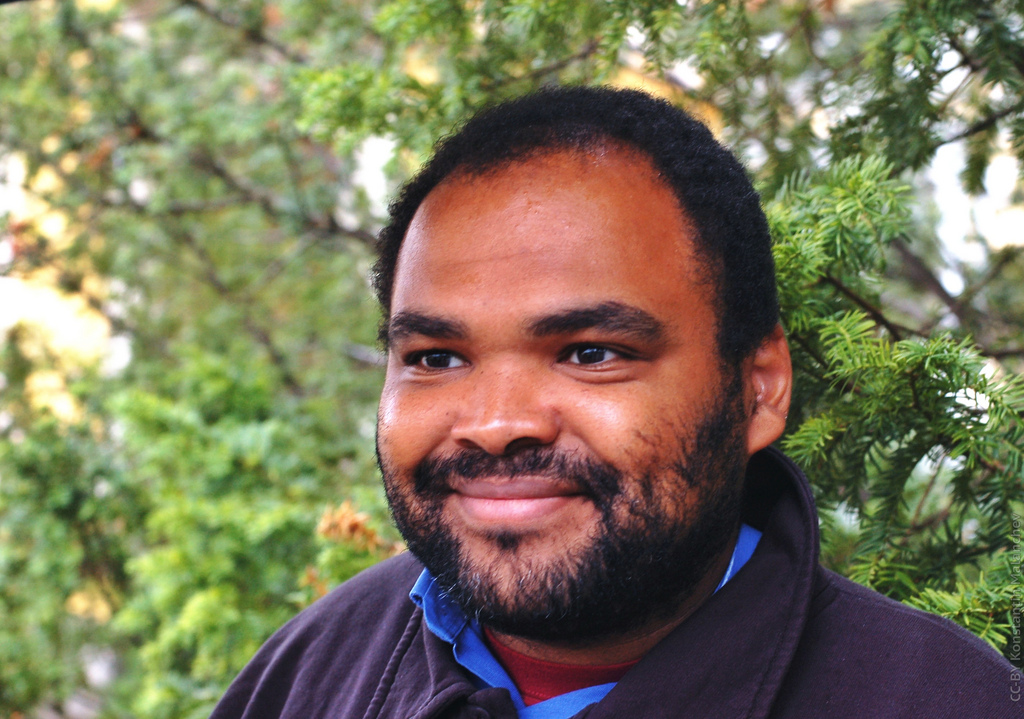
I am a senior lecturer at the University of Toulouse and an astrophysicist at the Institut de Recherche en Astrophysique et
Planétologie (Toulouse, France). I work on accretion/ejection phenomena around black
holes (from ~3 to 1e9 Solar masses) and neutron stars (NSs) through the use of
multi-wavelength observations in the framework of the transient sky astronomy and the multi-messenger astrophysics. The aims of my research are: i) To better understand the nature, formation paths (in particular for supermassives BHs with masses larger than 1e6 Solar masses), evolution and demography of black holes of various sizes in the Universe; ii) To investigate the physics and geometry of the accretion flows around BHs/NSs; iii) To study mechanical and radiative feedback into their surroundings on various scales and how this helps reprocessing baryons. To do so, I study different variable and transient sources: Gamma-ray bursts (GRBs), Ultra-/Hyper-Luminous X-ray sources (ULXs/HLXs, X-ray binaries (XRBs), Tidal Disruption Events (TDEs) and Active Galaxy Nuclei (AGN).
I am the PI of the ECLAIRs camera onboard the Chinese-French Gamma-ray Burst mission SVOM (Space-based multi-band Variable Object Monitor) that was successfully launched on June 22nd 2024. SVOM will work in synergy with gravitational wave and neutrinos facilities on ground. ECLAIRs is a coded-mask camera in charge of detecting and providing the first localization of Gamma-ray Burst and high energy transients in near real time and in an autonomous manner. I am also the science lead of the ECLAIRs instrument center (EIC) based in Toulouse (France) that deals with operational and calibration activities on the ECLAIRs camera in connection with the CNES (French Space Agency). I was the lead for the on-ground ECLAIRs calibration -- 2022 SPIE paper .
Video of the SVOM mission
I am also the science lead for a project of constellation of nano-satellites (3U cosmic Transient satellites) to survey the transient sky in synergy with gravitational wave and neutrino facilities in order to catch GRBs and other high-energy compact object transients. We are currently working in building a full prototype of the science payload (a 10x10x10 cm³-ish cube) and developping a dynamical simulator to assess the constellation performances.
I give lectures in physics and astrophysics at
the Université
of Toulouse. I share my teaching between lab. works, lectures and tutorials (Please visit the 'Teaching' item). I also supervise several undergraduate and graduate students every year as well as Ph-D students.